

Comprehensive Eye Exams at Human Eyes Vision Center, Myrtle Beach, SC
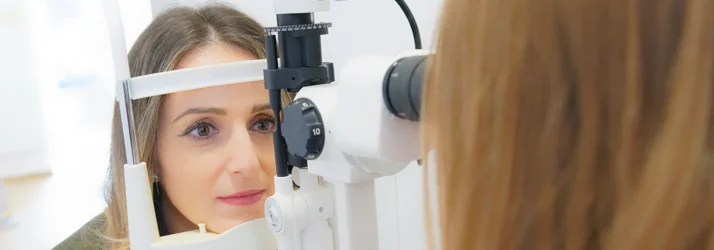
Regular eye exams are essential for correcting vision problems and protecting the long-term health of your eyes. At Human Eyes Vision Center, we provide thorough and comfortable exams designed to keep your sight clear and your eyes healthy. Our dedicated team is here to support all your vision care needs.
Call us today at (843) 443-6000 to book your appointment and take an important step in managing your eye health.
Why Regular Eye Exams Are Important for All Ages
Changes in your eyes can happen so slowly that you may not notice them at first. A regular eye exam is the best way to detect these changes before they become more serious problems.
- For Children: Eye exams are crucial for spotting issues that can impact learning and development. Although children may struggle to explain that they cannot see well, an exam can identify and address problems early.
- For Teens and Adults: Exams help track vision changes over the years, when conditions like nearsightedness, farsightedness, or astigmatism may develop. Corrective lenses like glasses or contacts keep vision sharp for daily activities.
- For Older Adults: Exams become even more vital with age. They allow for the early detection of conditions like presbyopia, cataracts, and glaucoma, which can cause serious harm if not addressed.
Detecting Common Vision Problems
A comprehensive eye exam does much more than just test your ability to read an eye chart. It helps us identify common vision problems that affect your daily life.
These issues often include:
- Nearsightedness (Myopia): Distant objects appear blurry.
- Farsightedness (Hyperopia): Close-up work or reading feels difficult.
- Astigmatism: Vision seems stretched or generally unclear due to an irregularly shaped cornea.
- Presbyopia: An age-related condition where the eyes lose the ability to focus sharply on close objects.
- Computer Vision Syndrome: Eye strain or dryness resulting from long hours spent on digital screens.
These conditions can be corrected with glasses or contact lenses, including specialized options like toric lenses for astigmatism or bifocals for presbyopia.
Finding Serious Eye Diseases Early
Many serious eye diseases develop without obvious symptoms in their early stages. An eye exam is the only way to detect these conditions before they can cause lasting damage to your vision.
Our exams screen for signs of:
- Glaucoma: Often called the "silent thief of sight," this disease involves increased eye pressure that damages the optic nerve, typically without early warning signs.
- Diabetic Eye Disease: High blood sugar can harm the blood vessels in the eyes, potentially leading to vision loss.
- Macular Degeneration: This condition affects central vision, making it difficult to read or recognize faces.
- Cataracts: The natural lens of the eye becomes cloudy, causing blurry vision.
- Conjunctivitis: An infection or allergy that causes redness and soreness in the eyes.
Catching these diseases early is the best way to protect your sight. Early intervention allows us to manage them with medication, surgery, or other treatments to preserve your vision.
Advanced Technology for Accurate Exams
Modern eye exams use sophisticated technology to give our doctors a safer and more detailed look at your eyes. These advanced tools help make our exams more accurate and efficient.
We use technology such as:
- Retinal Imaging: Takes a high-resolution photograph of the back of your eye, which helps in detecting diabetic eye disease or macular changes.
- Corneal Mapping: Creates a map of your cornea's surface curve, which is essential for diagnosing astigmatism or planning for LASIK.
- OCT Scans: Generates detailed, cross-sectional images of your eye tissue, crucial for monitoring conditions like glaucoma.
- Visual Field Testing: This test helps identify any blind spots in your peripheral vision, which can be an early sign of disease.
These diagnostic tools are painless and provide clear, immediate results, allowing for earlier and more effective treatment.
What to Expect During Your Eye Exam
An eye exam at our office is a gentle and straightforward process that is typically completed in under an hour.
A comprehensive exam generally includes:
- Patient History: We will ask about your overall health, any vision concerns, and your family's medical history.
- Visual Acuity Test: This involves reading letters on a standardized chart to measure the clarity of your vision.
- Refraction Test: This helps determine the precise lens prescription you need for the clearest possible vision.
- Eye Muscle Test: We will check how your eyes move and work together as a team.
- Slit-Lamp Exam: A microscope is used to get a magnified view of the cornea, iris, and lens.
- Retinal Exam: We will examine the back of your eye using imaging or a special light.
Throughout the exam, we will explain each step so you feel comfortable and informed.
Meet Dr. Benjamin Bittner
Dr. Benjamin Bittner grew up in Miami, Florida. He studied Microbiology at Florida Atlantic University, graduating with honors before earning his Doctorate in Optometry at Nova Southeastern University. He enjoys getting to know the patients he helps and is grateful for the opportunity to improve their vision and change their lives for the better.
Payment and Insurance
We accept most prominent medical plans, including:
- Medicare
- Aetna
- Blue Cross & Blue Shield
- United Healthcare
- Cigna
- Medicaid
- Tricare
We also work with major vision plans like VSP, Spectera, Davis, Always Care, and Medicaid. Our staff can help you verify your coverage before your visit.

OFFICE HOURS
Monday
9:00am - 5:00pm
Tuesday
9:00am - 5:00pm
Wednesday
9:00am - 5:00pm
Thursday
9:00am - 5:00pm
Friday
9:00am - 5:00pm
Saturday & Sunday
Closed

Human Eyes Vision Center
9403 SC-707 unit c
Myrtle Beach, SC 29588