

Prescription Eyeglasses Made Same Day
At Human Eyes Vision Center, we're transforming the way you get eyewear. We combine unparalleled quality with exceptional speed, ensuring your vision needs are met without delay.
Our state-of-the-art optical lab, staffed by our expert opticians, crafts every pair with precision using premium materials. Select your frames and walk out with your new prescription glasses in as little as half an hour.
Experience the perfect blend of convenience and excellence.
Begin Your Journey to Better Vision

Eye Exams
Routine eye exams at Human Eyes Vision Center are essential for detecting vision problems, monitoring eye health, and identifying early signs of serious conditions.

OptiLight by Lumenis
OptiLight uses precise pulses of light to reduce the inflammation that is typically associated with dry eye disease.

Contact Lenses
Thin, curved lenses worn on the eye's surface to correct vision. They offer a convenient alternative to glasses, providing clear vision and versatility.

Lenses & Frames
Customized lenses at Human Eyes Vision Center paired with stylish frames to correct vision and suit personal style, ensuring clarity and comfort.

Dry Eye
At Human Eyes Vision Center, we specialize in providing gentle and effective care to relieve your symptoms.

Myopia Management
At Human Eyes Vision Center, we are dedicated to managing both simple and complex vision conditions like Myopia.

Eye Doctor Myrtle Beach SC
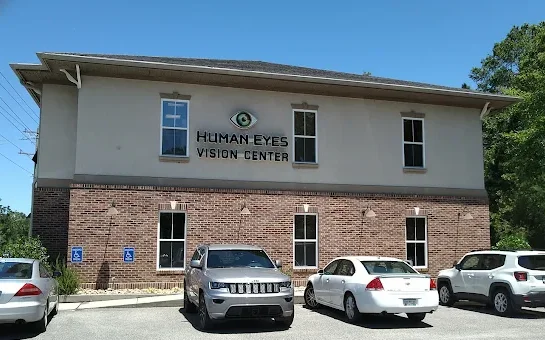
Welcome to Human Eyes Vision Center, which is located in Myrtle Beach SC. We offer comprehensive eye care services to enhance vision and promote eye health. The top-rated Dr. Benjamin Bittner O.D., has years of experience in providing safe, effective, and personalized eye care to patients in Myrtle Beach and surrounding areas. We want to be your Myrtle Beach SC eye doctor.
We invite you to visit our optometry office for a range of services, to achieve and maintain optimal vision and eye health. We are accepting new patients. Be sure to call ahead with Dr. Bittner to book an appointment.

Request an Appointment
Welcome To Human Eyes Vision Center
Let’s see! God’s amazing gift of sight and spectacular design is one more reason to give Him thanks! Your eyes are my priority, come see us today for a comprehensive ocular examination.
Our mission at Human Eyes Vision Center is to enhance the quality of life for our patients by providing exceptional, personalized eye care. We are dedicated to preserving and improving vision through cutting-edge technology, compassionate service, and a commitment to lifelong eye health. Our goal is to empower every patient with the clarity and confidence they need to see the world at its best.
The Importance of Vision Care Even Without Apparent Issues
You may not currently experience any vision problems, but regular vision care is still essential for maintaining optimal eye health. Many serious eye conditions, such as glaucoma, diabetic retinopathy, and macular degeneration, can develop without noticeable symptoms in their early stages. Regular eye exams can detect these conditions early, allowing for timely intervention and preventing potential vision loss. Additionally, eye exams can reveal signs of systemic health issues like diabetes and high blood pressure. By prioritizing routine vision care, you ensure that any underlying issues are identified and managed before they impact your vision and overall health.
The History of Eye Care
The history of eye care dates back thousands of years, with ancient civilizations making significant contributions to our understanding of vision and eye health. In ancient Egypt, around 1550 BC, the Ebers Papyrus documented various treatments for eye diseases, highlighting the early recognition of the importance of eye care. The Greeks and Romans also made notable advancements, with renowned figures like Hippocrates and Galen studying and writing about ocular anatomy and conditions. Their work laid the foundation for future medical practices and the development of specialized eye care.
During the Middle Ages, Islamic scholars such as Alhazen (Ibn al-Haytham) made groundbreaking strides in optics and vision science. Alhazen's Book of Optics, written in the 11th century, challenged earlier Greek theories of vision and introduced new concepts about how light and the eye interact. The Renaissance period saw further advancements, particularly with the invention of spectacles in the late 13th century, which revolutionized the way people corrected their vision. These historical milestones collectively contributed to the evolution of modern ophthalmology and optometry, leading to the sophisticated eye care practices we benefit from today.
Our Trusted Partners



Words of wisdom for the month:
For the word of God is living and effective
and sharper than any two-edge sword,
penetrating as far as to divide soul, spirit,
joints, and marrow; it is a judge of the
ideas and thoughts of the heart
- Hebrews 4:12
Some Key Regions Of The Eye
The human eye is a marvel of biology, composed of several intricate regions that work together to capture and process visual information. Understanding these key areas is essential to appreciating how vision works and recognizing potential issues affecting eye health.

Cornea: Transparent dome, covers iris and pupil, focuses light, protects the eye, key to vision.
LensLens: Transparent, focuses light, adjusts for distance, essential for clear vision.
ScleraSclera: The white outer layer, protects the eye, maintains shape, and supports internal structures.
PupilPupil: Central opening, regulates light entry, adjusts size, vital for vision clarity.
RetinaRetina: Light-sensitive layer, that converts light to signals, enables vision, and connects to optic nerve.
Vitreous BodyVitreous Body: Clear gel, fills the eye, maintains shape, supports retina, transmits light.
Optic NerveOptic Nerve: Transmits visual signals, connects the eye to the brain, essential for sight.
Optic DiscOptic Disc: The blind spot, where the optic nerve exits, lacks photoreceptors, crucial for signal transmission.
What Kind of Training Does an Optometrist Have?
Optometrists undergo extensive training to become experts in eye health and vision care. Their education begins with a bachelor's degree, typically in a science-related field, followed by enrollment in a four-year optometry program at an accredited optometry school. During these four years, optometry students study various subjects, including optics, visual science, anatomy, physiology, and pathology of the eye. They also receive hands-on clinical training, where they learn to diagnose and manage a wide range of eye conditions, prescribe corrective lenses, and provide vision therapy.
In addition to their formal education, optometrists must pass a series of rigorous exams to obtain their license to practice. This includes the National Board of Examiners in Optometry (NBEO) exams, which test their knowledge and clinical skills. Some optometrists choose to further specialize in areas such as pediatric optometry, geriatric optometry, or ocular disease through residency programs, which provide an additional one to two years of focused training. Continuous education is a crucial part of their career, as they must stay updated with the latest advancements in eye care and treatment techniques to provide the best possible care for their patients.
Your Eyes Are Our Priority: Improve Your Vision
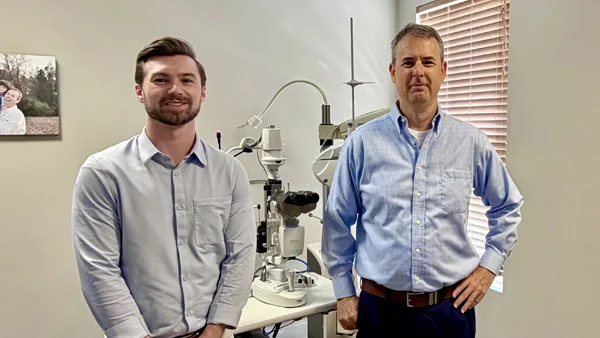
- Expert Doctors and Staff: Meet the experienced and friendly doctors and staff who make Human Eyes Vision the leading provider of vision care.
- Vision Correction: Vision correction is a general term used to describe a variety of optometric techniques for correcting less-than-perfect vision.
- Emergency Help: Contact Human Eyes Vision Center to schedule an appointment or to request additional information about our services.
- Modern Technology: A state-of-the-art optical machine that uses a new digital technology to dispense more accurately than ever before.
Begin Your Journey to Health in 3 Easy Steps